

BlogFraud prevention
How a fraud analyst makes the call
Every alert is a choice between blocking a real customer and letting a fraudster through. Here is how analysts read the signals and decide, one case at a time.
Paul E. & Paul A., Founders · Nov 2, 2026 · 4 min read

A card authorization lands in the queue. A risk model has already given it a score. The clock is running, because the customer is standing at a counter or waiting on an online order. You have a few minutes to decide: approve, decline, or step up and verify.
That is the fraud analyst's job in one paragraph. It sounds simple. It is not, because both wrong answers hurt someone.
Decline a real customer
- A loyal cardholder is embarrassed at the register
- They switch to another card and may not come back
- Support takes the angry call
Approve a fraudster
- The loss lands on the bank or the merchant
- The real cardholder has to dispute it
- The fraudster tries again, with the same pattern
The scale of the problem
Fraud is not a niche problem. The U.S. Federal Trade Commission reported a sharp jump in losses consumers reported in 2024, and a larger share of people who reported fraud said they had lost funds.
The FTC also found that people lost more through bank transfers and cryptocurrency than through all other payment methods combined. Every one of those losses passed through someone's decision, or someone's missing decision.
Step 1: find the one signal that separates the case
A risk score tells you that something looks unusual. It does not tell you why, or whether the unusual thing is innocent. Good analysts look for the signal that separates this case from an ordinary one:
- A new device and a shipping address that has never been used, on the same order
- A run of small test authorizations just before a large one
- A card address in one country, an IP address in another, and neither matching the card's usual activity
- A sudden change of email or phone number right before a high-value order
One signal alone is rarely enough. Two or three that point the same way are a case.
Step 2: weigh the innocent explanation fairly
This is the step that separates a good analyst from an anxious one. Before you decline, ask: what would an honest customer doing this look like?
A cardholder on vacation buys from a new country. A parent orders for a child at college, to a new address. Someone gets a new phone. Each of these trips a model, and each is an ordinary life event. If the evidence fits the innocent story just as well, the case is not made.
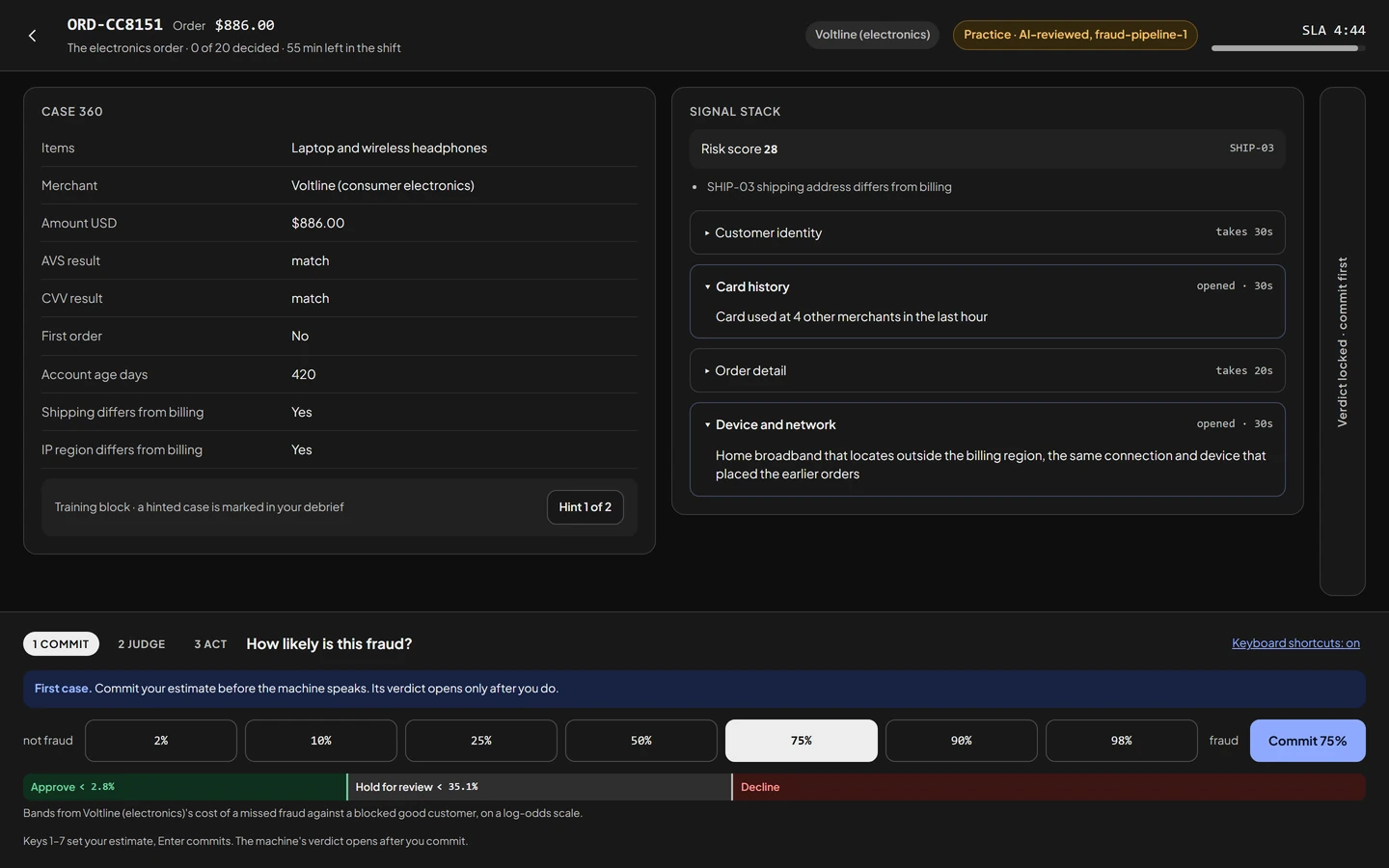
Step 3: make your call first, then judge the model's
Models are good at spotting patterns across millions of transactions. They are bad at context. The strongest analysts form their own view before looking at the model's verdict, then compare. Where they disagree, that disagreement is the interesting part, and it is where the analyst earns their place.
Step 4: write the reason so a stranger could re-decide it
Fraud decisions get reviewed: by a team lead, by a dispute team, sometimes by a regulator. A good case note lets someone who never saw the case reach the same decision from your words alone:
- The decision, in one word
- The two or three signals, with their values
- The innocent explanation you considered, and why it did not fit
- What would have changed your mind
Getting into fraud prevention
Fraud teams hire from customer support, banking operations, retail and data roles. What they want to see is judgement under a clock, and clear written reasons. You can build both:
- Read how the work is judged in our Fraud prevention guide.
- Work real-looking cases on the Fraud prevention desk, where every decision is graded and saved to your Shift Record.
- Learn the consumer side from the FTC's own Consumer Sentinel data.
The best fraud analysts are not the ones who decline the most. They are the ones whose declines, and approvals, can be explained.
Sources and further reading
- Federal Trade Commission, New FTC data show a big jump in reported losses to fraud to 12.5 billion in 2024, March 10, 2025.
- Zeloric, Fraud prevention guide and Fraud prevention desk.
#fraud prevention #careers #payments
Reading about the work is one thing. Doing it is how you show it. Your first ticket is free, with no account needed.
Try a realistic ticket free